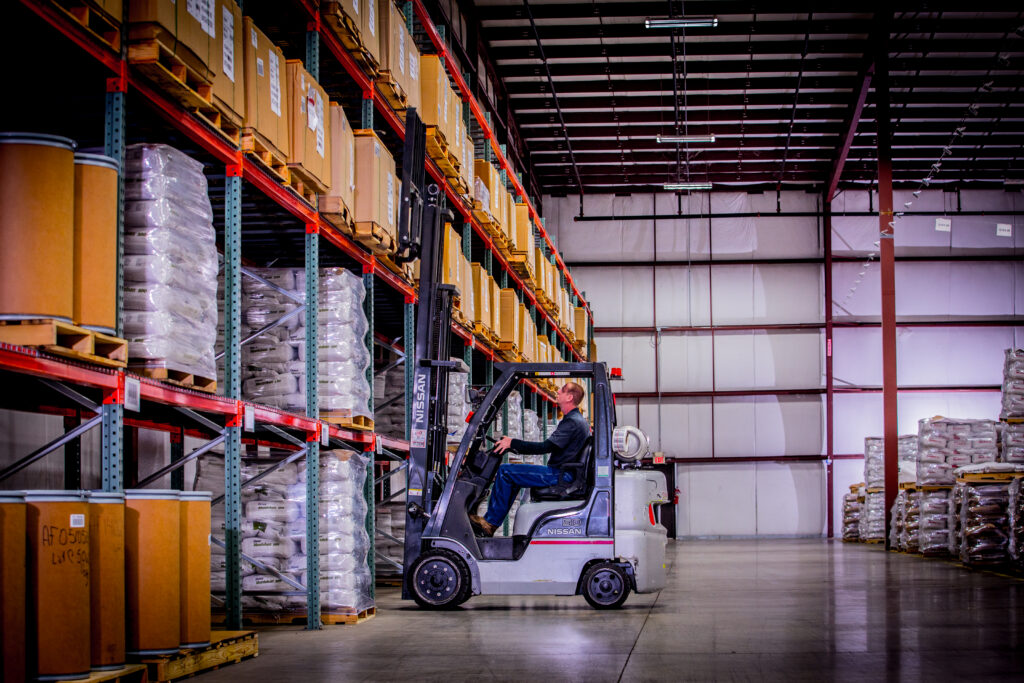
If you’re searching for warehouse space in Indiana, Indianapolis is a natural place to start. Its interstate connections make the region a practical option for serving Midwest markets.
But a warehouse location should fit the way your freight moves, not just look good on a map. The right choice depends on where suppliers and customers are, how close inventory needs to be to production, what it costs to move and hold product, and how much flexibility your operation needs.
For some companies, Indianapolis is the right answer. For others, the better fit may be elsewhere in Indiana.
Why choose Indianapolis warehousing?
Indianapolis has strong regional highway connections and puts shippers within reach of markets such as Chicago, Columbus, Cleveland, Cincinnati, Louisville, and St. Louis. For a company serving multiple Midwestern markets, that reach can make a central Indiana warehouse worth considering.
The Indianapolis region also has a substantial manufacturing and agriculture base. That can matter when your warehouse supports production, suppliers, or customers in those industries. A location near the people and facilities you serve may make it easier to plan regular replenishment, consolidate shipments, or keep inventory available without storing every pallet at the plant.
Still, “near Indianapolis” can describe a wide area. Before choosing a central Indiana warehouse, check how the actual facility connects to your routes, customers, and production sites. A city name alone will not tell you whether the location reduces cost or makes daily operations easier.
How do you choose an Indiana warehouse location?
A practical warehouse location strategy starts with your own freight and inventory patterns. Compare the options against the work the warehouse needs to do.
- Map your inbound and outbound lanes. List where product comes from, where it ships, and how often those moves happen. A location that looks central may add miles to your highest-volume lanes. Compare the routes that matter most, not just the number of cities within a radius.
- Measure proximity to production and customers. If materials need to reach a plant on a schedule, distance from that plant matters. If finished goods are staged for regional distribution, customer and carrier access may matter more. Many operations need to balance both.
- Compare total operating cost, not just the warehouse rate. Include transportation, additional handling, inventory carrying costs, and the effect of delayed or disrupted production. Do not assume that a larger market is automatically cheaper or more expensive. Get comparable quotes and model them against your real lanes and volumes.
- Balance just-in-time efficiency with inventory protection. Weigh the cost of safety stock against the risk of production disruption when deliveries slip or schedules change. Plant-support warehousing for manufacturers can keep materials available without crowding production space.
- Check the warehouse’s operational fit. Confirm that the provider can handle your product and storage requirements, whether you need ambient, climate-controlled, or food-grade space, and whether your freight moves as full pallets, bulk product, or smaller picks. Ask how receiving, inventory control, staging, and transportation coordination will work in practice.
When is an Indianapolis warehouse the right fit?
Indianapolis may be the strongest choice when your key customers, suppliers, or plants are concentrated in the metro area, or when your day-to-day operation depends on being close to specific routes and freight activity there. It can also make sense when the benefits of that proximity outweigh the costs and trade-offs of the particular facility you are considering.
The point is not to avoid Indianapolis. It is to be precise about what you need from the location. If the warehouse must support a nearby plant with frequent moves, a site across the state may not be a substitute. If your inventory serves a wider Midwest footprint, however, it may be worth comparing more than one Indiana market.
Does an Indiana warehouse need to be in Indianapolis?
A warehouse near Indianapolis does not have to sit inside the metro. Terre Haute, in western Indiana along I-70, is another option to assess when your business serves regional markets or supports a plant outside the Indianapolis area. U.S. 41 also provides a north-south connection through the region.
Terre Haute may be worth including in a Midwest warehouse location search if you need full-pallet or bulk storage, overflow or seasonal space, or inventory support for manufacturing. A nearby warehouse can help keep raw materials, packaging, or finished goods off a crowded production floor. Warehouse and trucking coordination can also reduce handoffs when product needs to move between a facility and a plant.
What should you compare when selecting an Indiana 3PL warehouse?
If you are comparing an Indiana 3PL warehouse, lay out your key lanes, inventory profile, service requirements, and disruption risks before choosing a location. Then compare Indianapolis with other viable sites on the same terms.
Distributors Terminal is a family-owned, fourth-generation warehousing and logistics company based in Terre Haute, with more than a century of experience. Its regional model is built around practical warehousing needs such as palletized inventory, plant support, overflow storage, and transportation coordination. The fit depends on your lanes and operating requirements, not simply on whether you searched for an Indianapolis warehouse.
Distributors Terminal’s Terre Haute warehousing services may suit operations seeking a regional location west of Indianapolis, while its Indiana warehouse location comparison gives context for evaluating that alternative. To assess your own lanes and storage needs, start a warehousing conversation with Distributors Terminal.